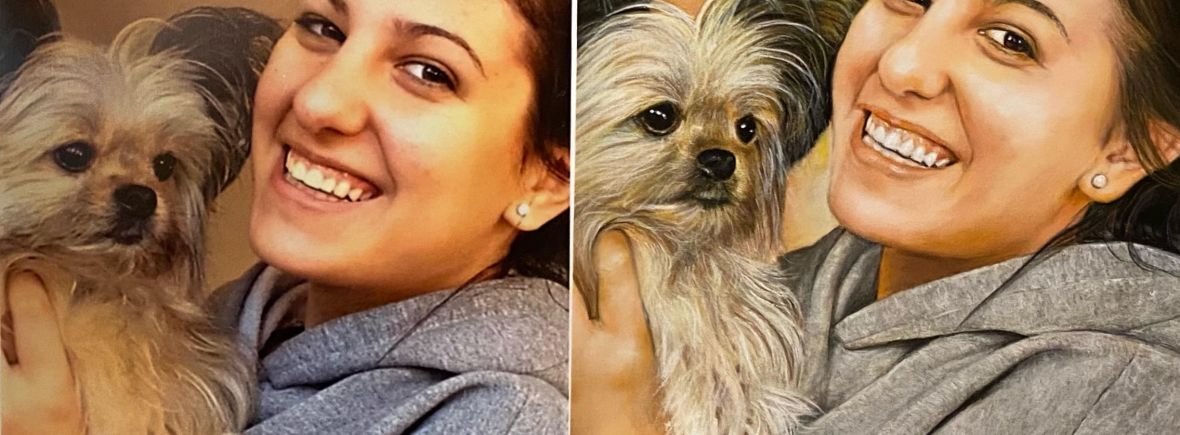
Below are some examples on how acrylic paintings or pastel portraits are created, by showing the different stages.
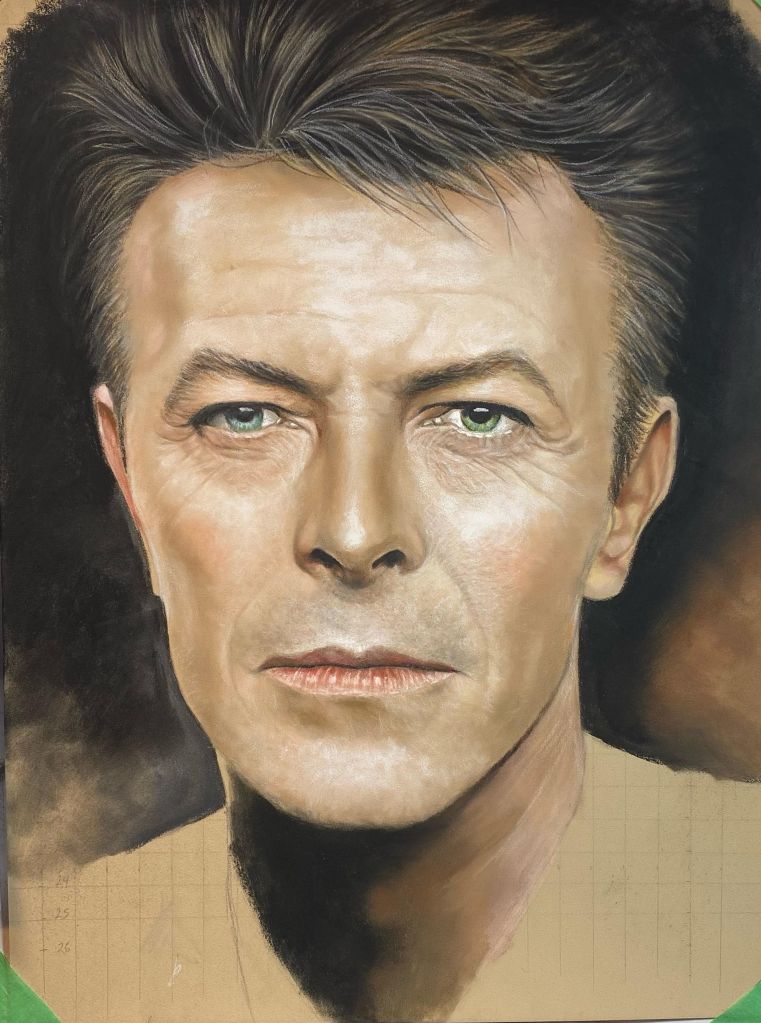
NOTE THE DIFFERENT STAGES ON THIS PASTEL PORTRAIT OF DAVID BOWIE.
STEP 1.
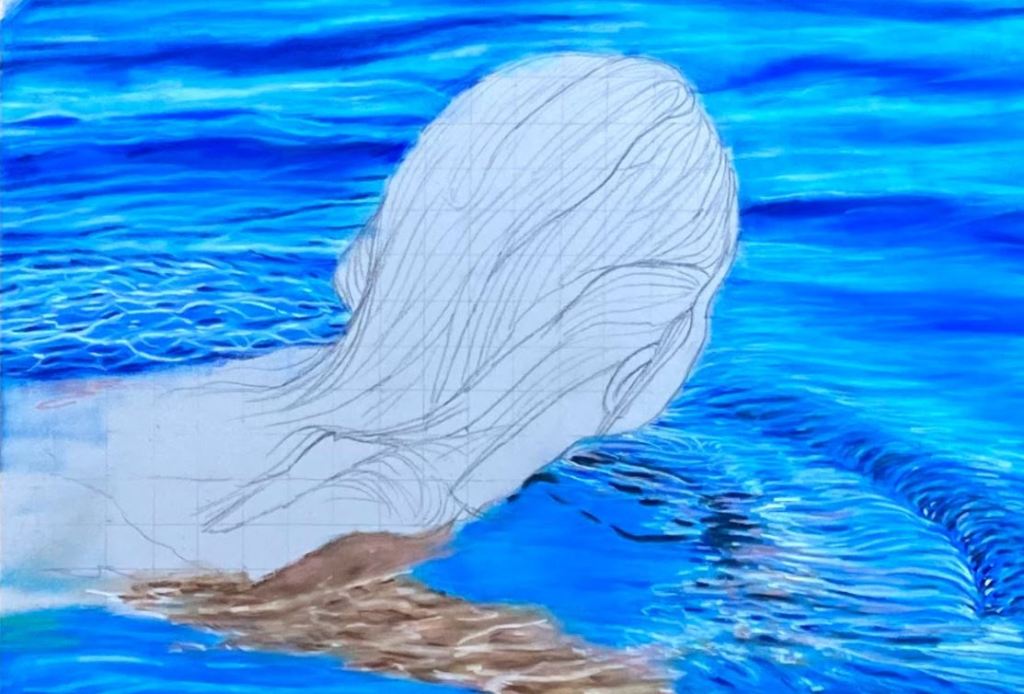
Sketching with extreme accuracy by using a grid is of the utmost importance. If any part at this stage is not accurate, the painting will not resemble the reference photo. There is no room for error.
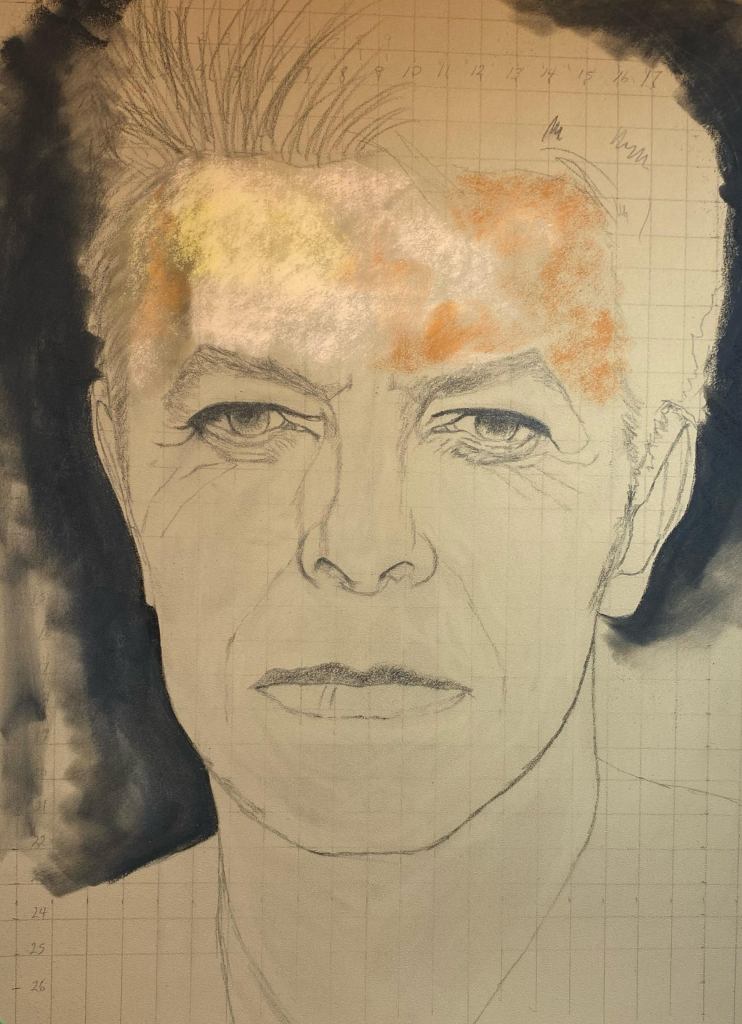
STEP 2. This next step is to patiently add and blend colours, beginning with the first layer of the background and then the apply first layer to the face.
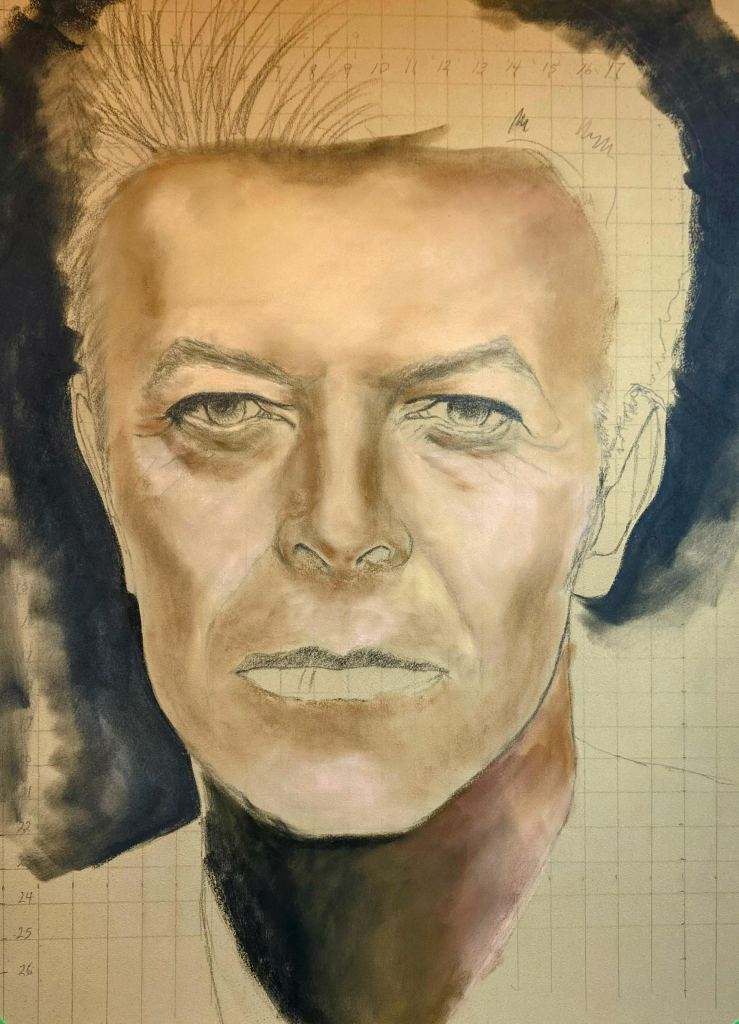
STEP 3.
Follow with working on the fine details on the eyes, nose and mouth, wrinkles, etc. Start by focusing on the eyes which are the most important part of the face and must be precise. This will take the most time and effort. Do not rush…spend as much time as necessary until you get it right.
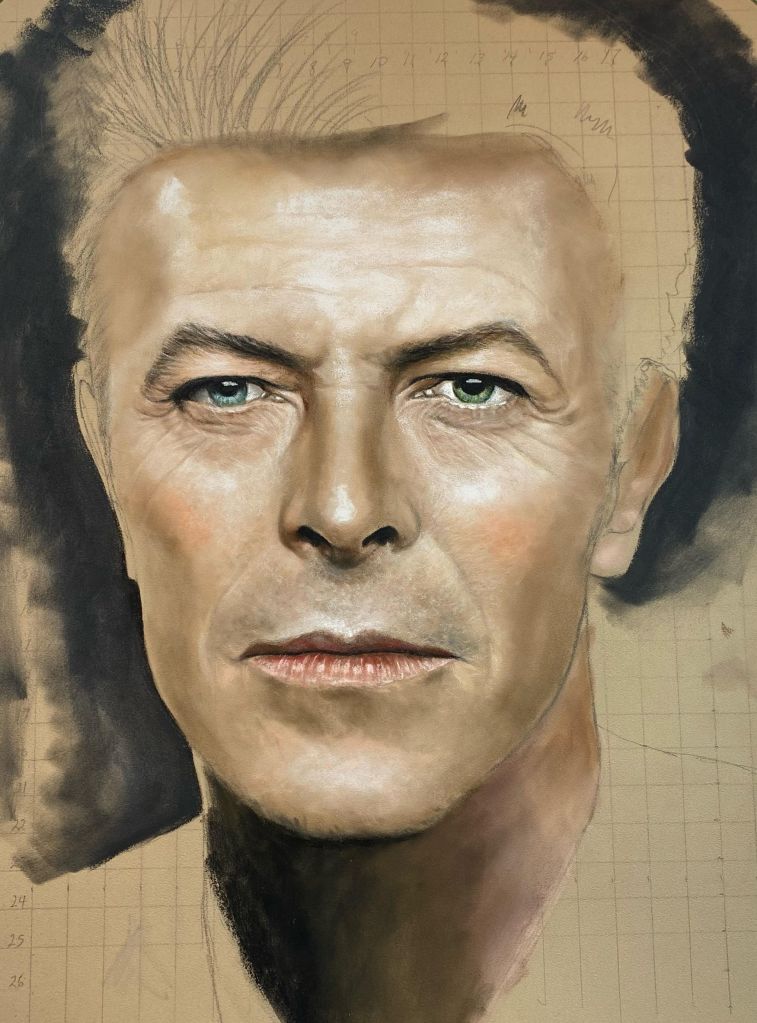
STEP 4.
Now you paint the hair, the shirt and jacket. Make sure you capture as much detail as possible.
STEP 5.
At this stage you now scope the entire painting and look for any minor imperfections and add more fine detail to the skin, eyes etc. This will improve the overall realism of your painting.

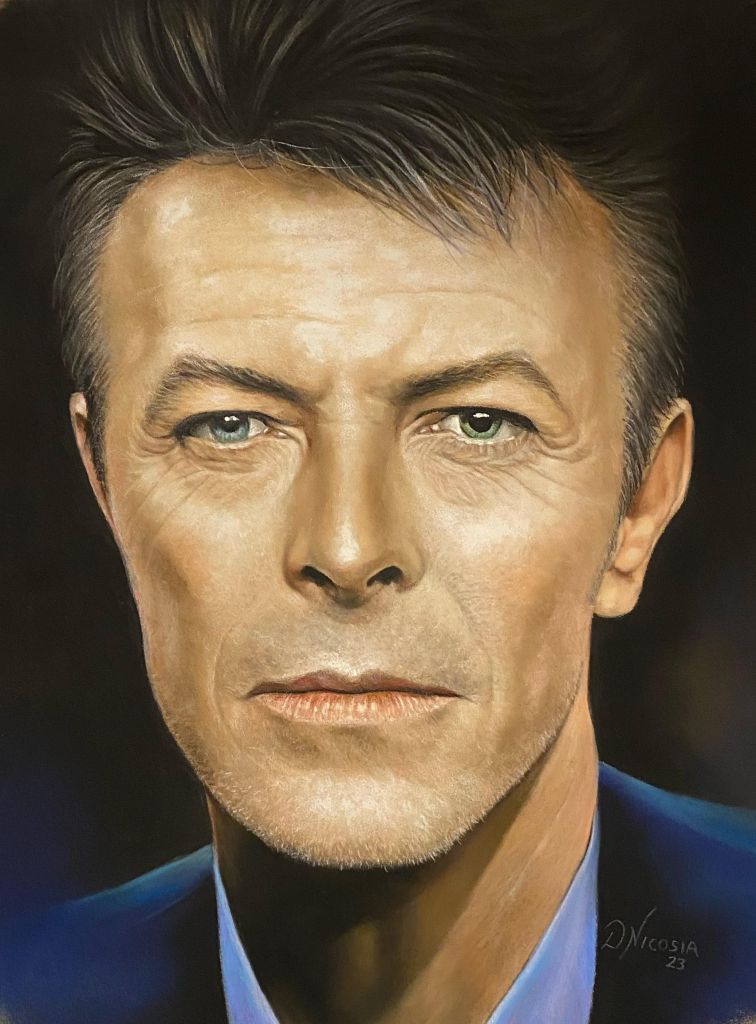
FINAL STAGE.
Now you have an ultra realistic painting. The final product is the result and reflection of all the hours spent on the fine details, being precise and accurate on your painting.
After the accurate sketch, I always begin by painting the rough background colours first. Then I work on the main subject giving the first basic coat.
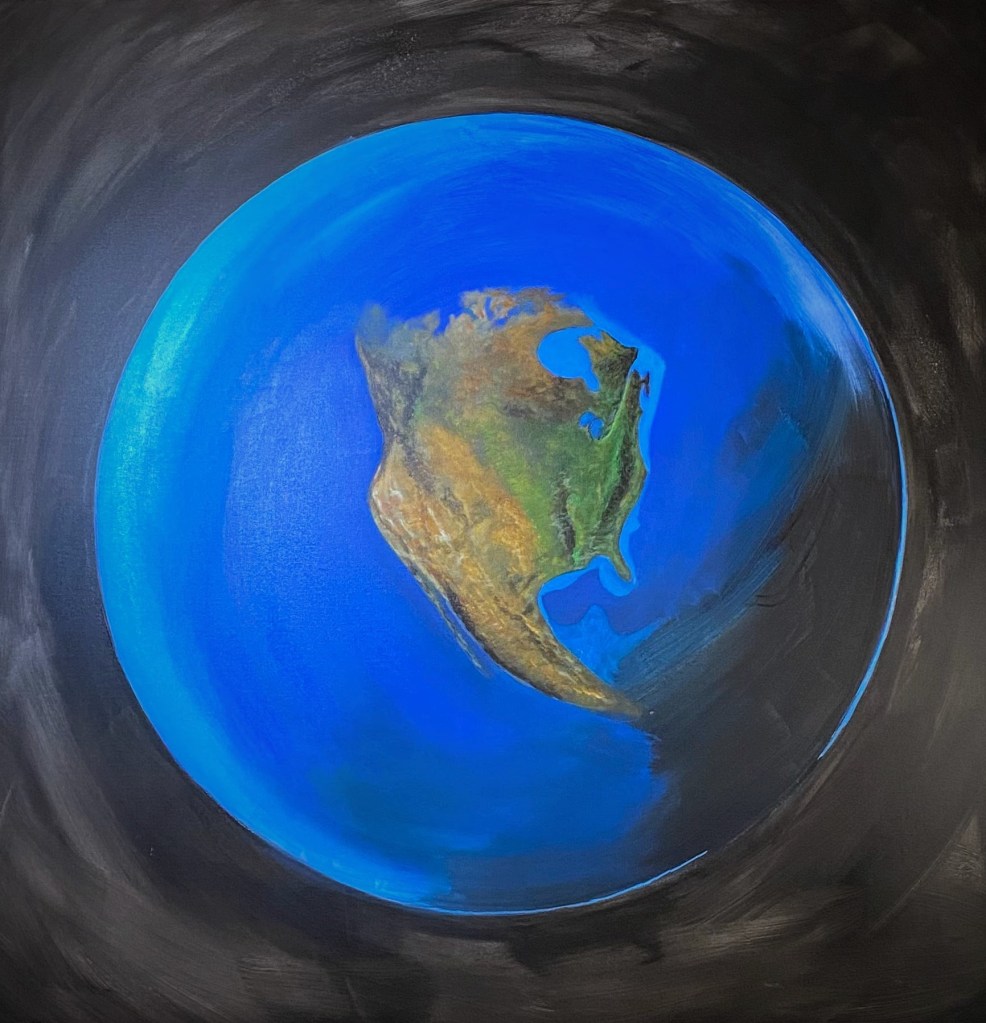
The next step is to apply the fine details on the earth and the background including the hundreds of far away stars.

Whether you are painting a realistic portrait with acrylics or pastels, accuracy in the initial sketch is of the utmost importance. There is no room for error in the sketch or the painting will not look exactly like the reference photo. Once the detailed drawing is complete, start painting and focus on the fine details.
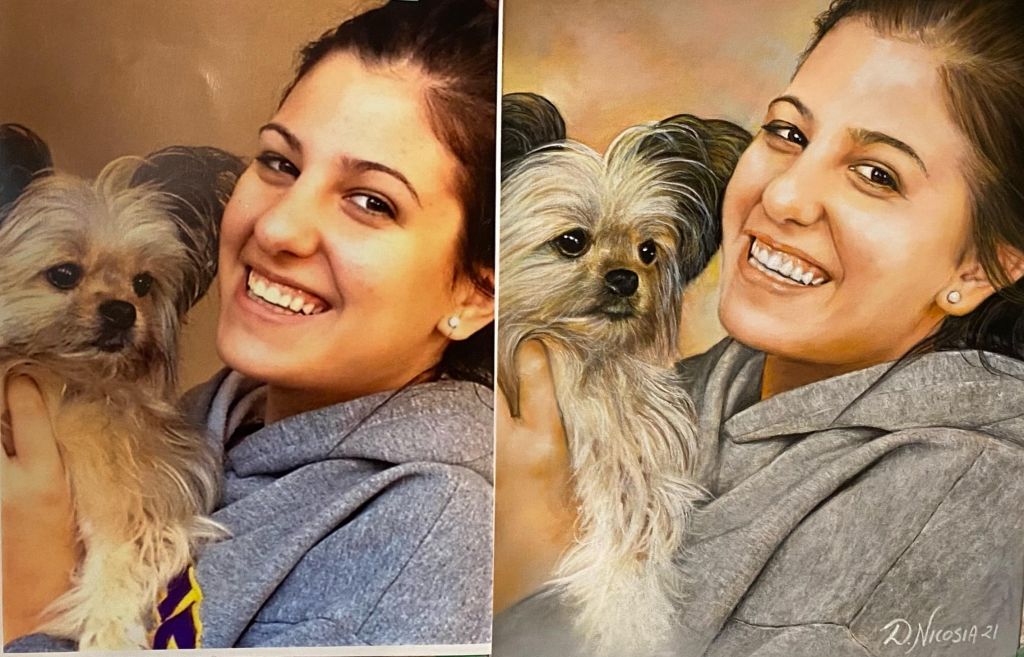
My client purchased the painting below (unknown artist) and soon got tired of it and asked me to rejuvenate this painting. I was instructed to use my discretion to bring it to life. She was extremely happy with the final result.
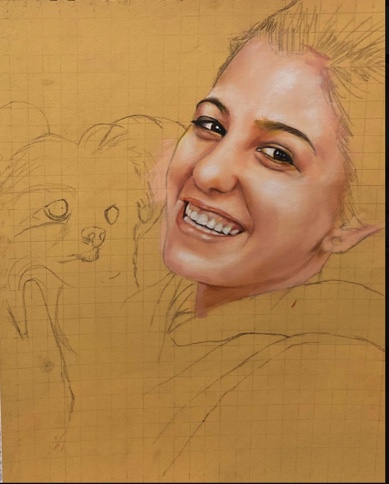
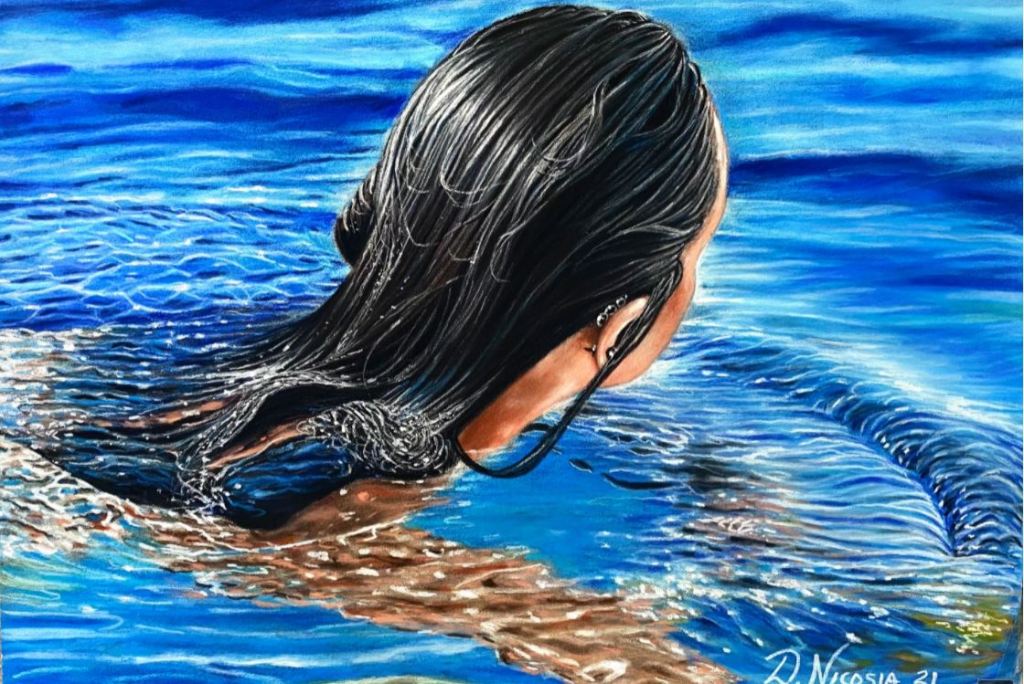
Below, I practiced painting with pastel, a lady with wet hair (9×12). This is the updated version of the painting based on some of the tips received from my fellow artist on I AM AN ARTIST Facebook page. This posting received over 13,200 likes and 177 shares. Next I will try painting with acrylic.
This painting of 2 leopards is on a 36″ x 48″ stretched canvas with Acrylic paint. My customer wanted slight colour added to this black and white picture. The eyes had to be painted with one leopard having blue and the other with brown. I also insert a black velvety material under the leopards to take away the illusion of them floating in air.
The first stage is drawing the overall sketch. This is the most important part of the creation and must be very accurate and detailed. Any error at this stage will lead to distortion and will not look like the original print.
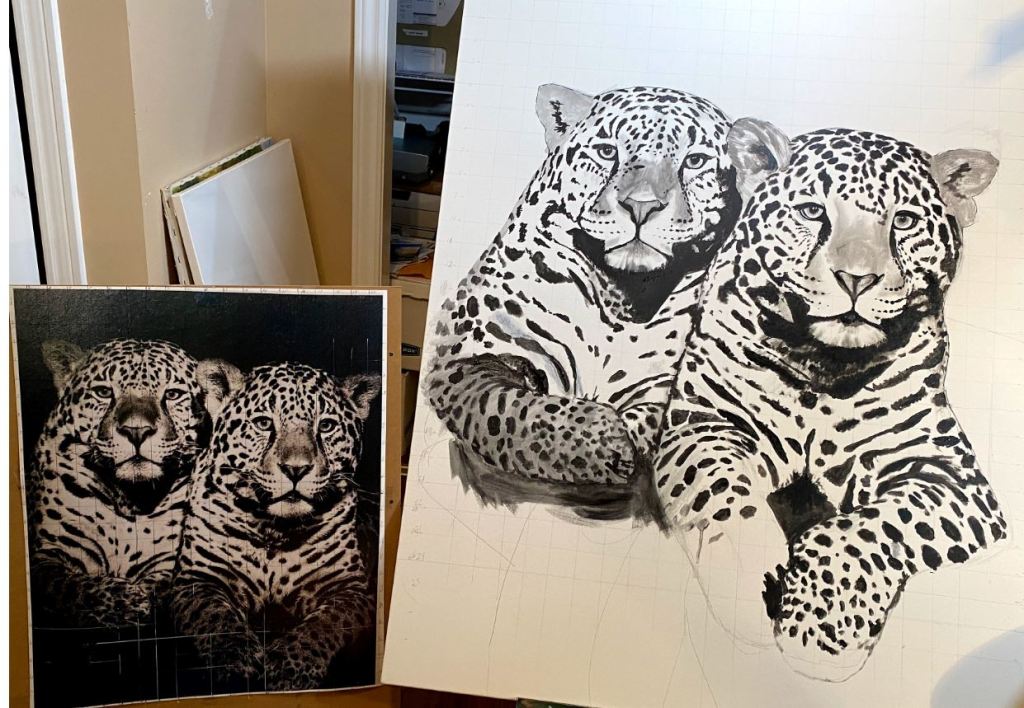
Second stage.
At this point I start to paint the background and the darker areas of the painting to give depth and life.
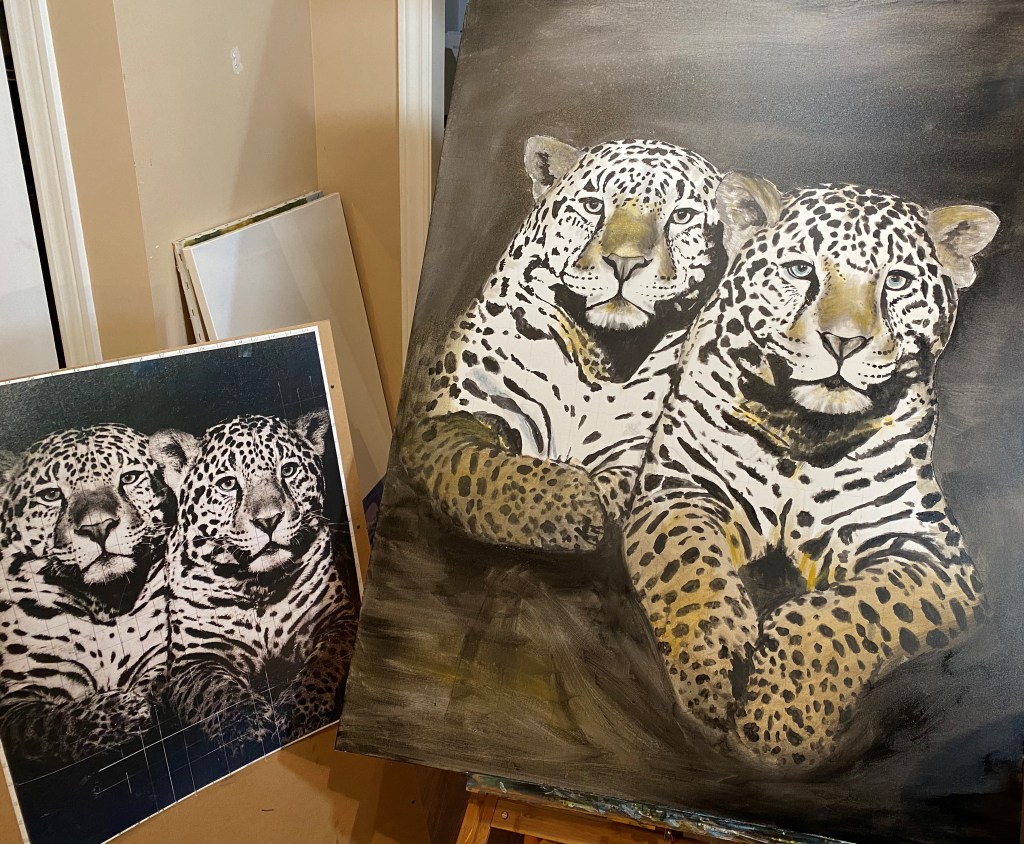
Final stage.
At this stage I work on the fine details. This takes the longest and most time consuming, but extremely important part of the painting.
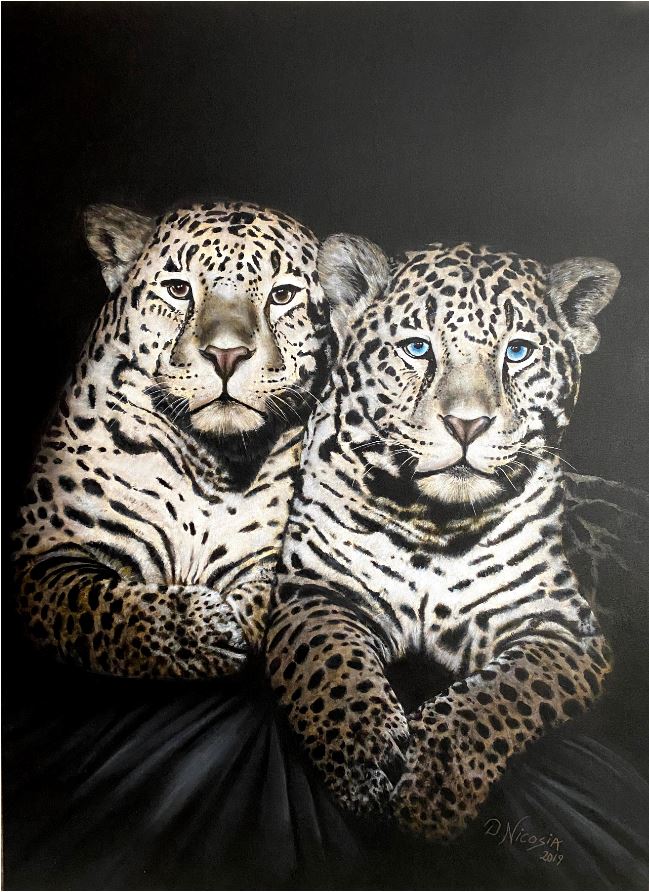
Painting of a famous cliff in Ireland. Note the fine details on the rock formation. Very time consuming but it is well worth the effort to produce a realistic painting.
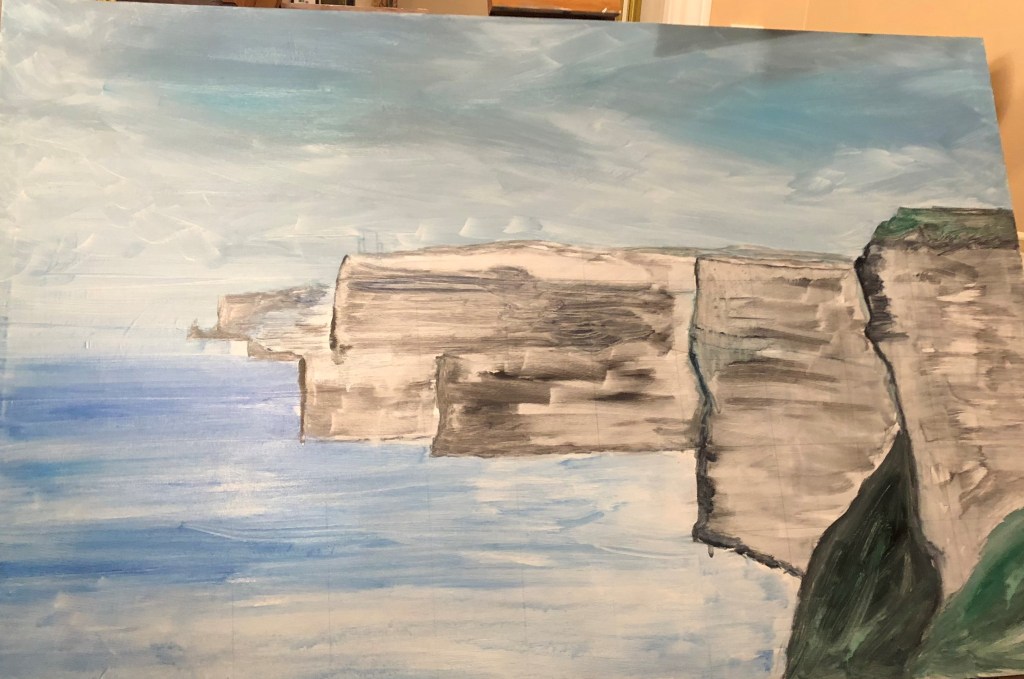
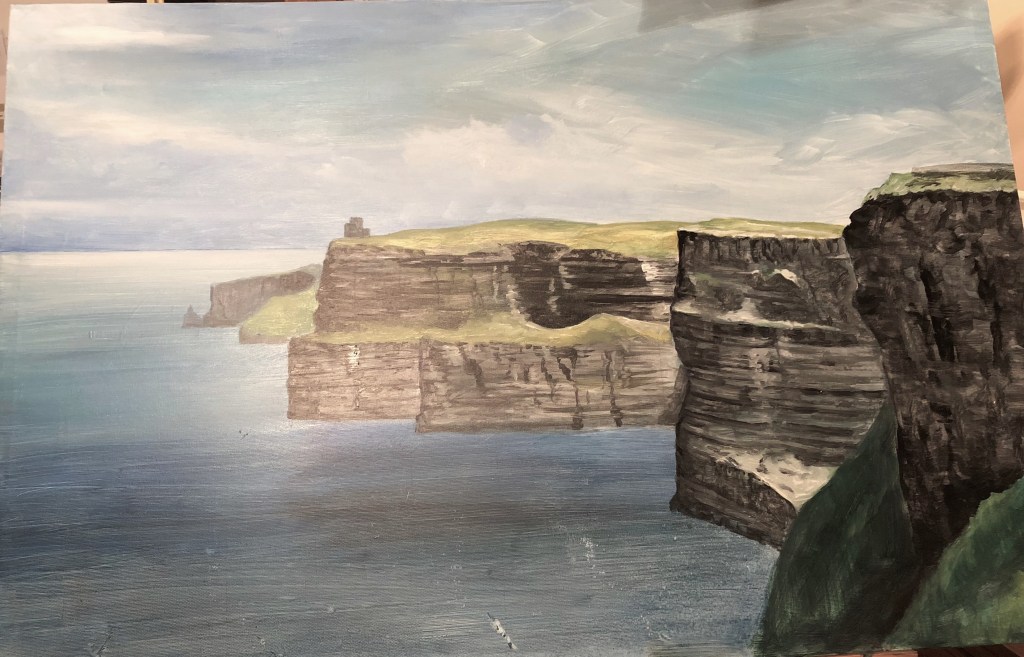
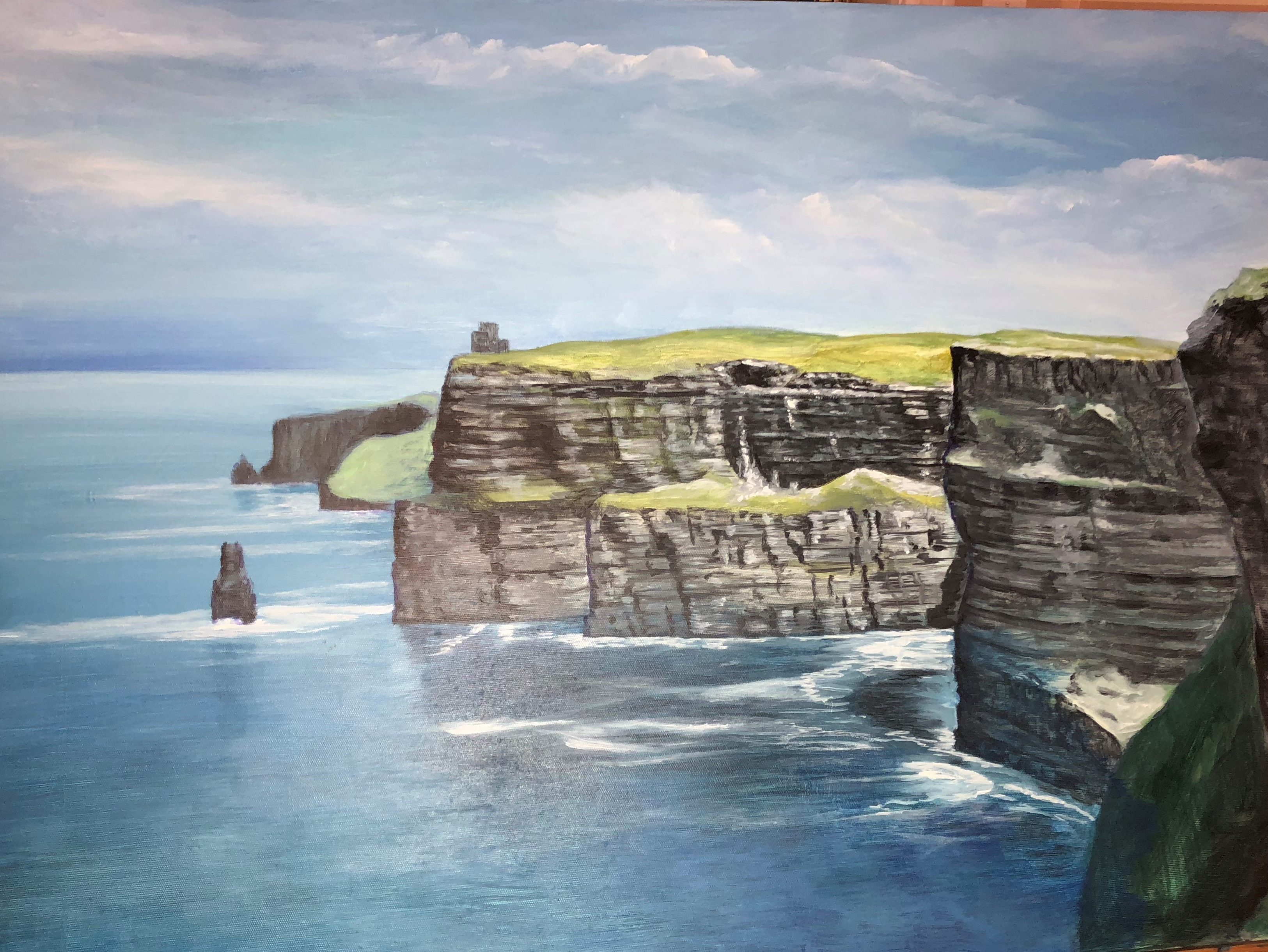
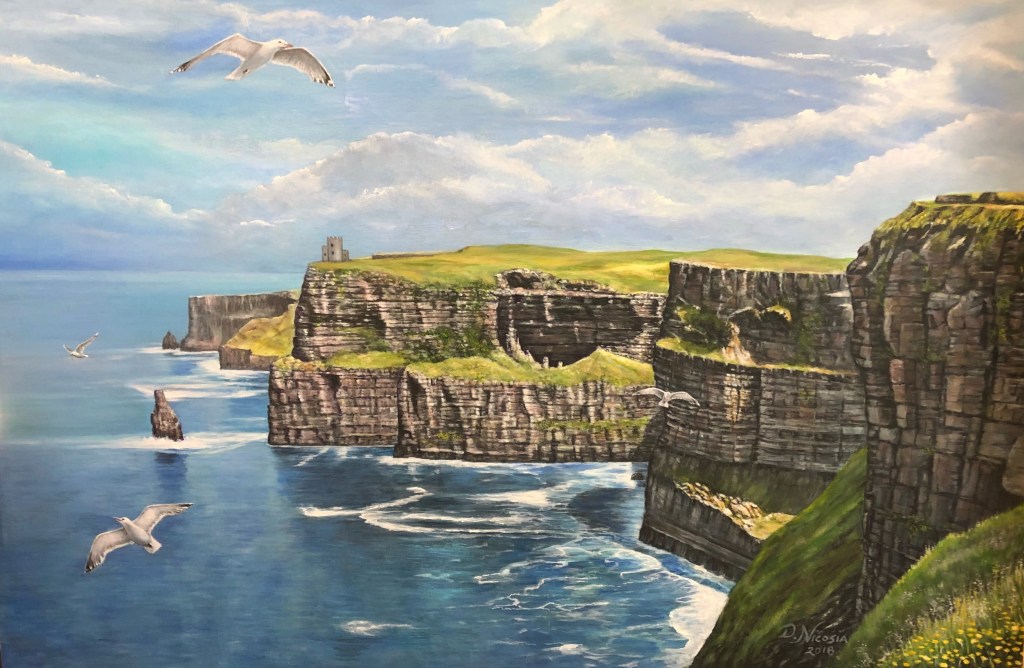
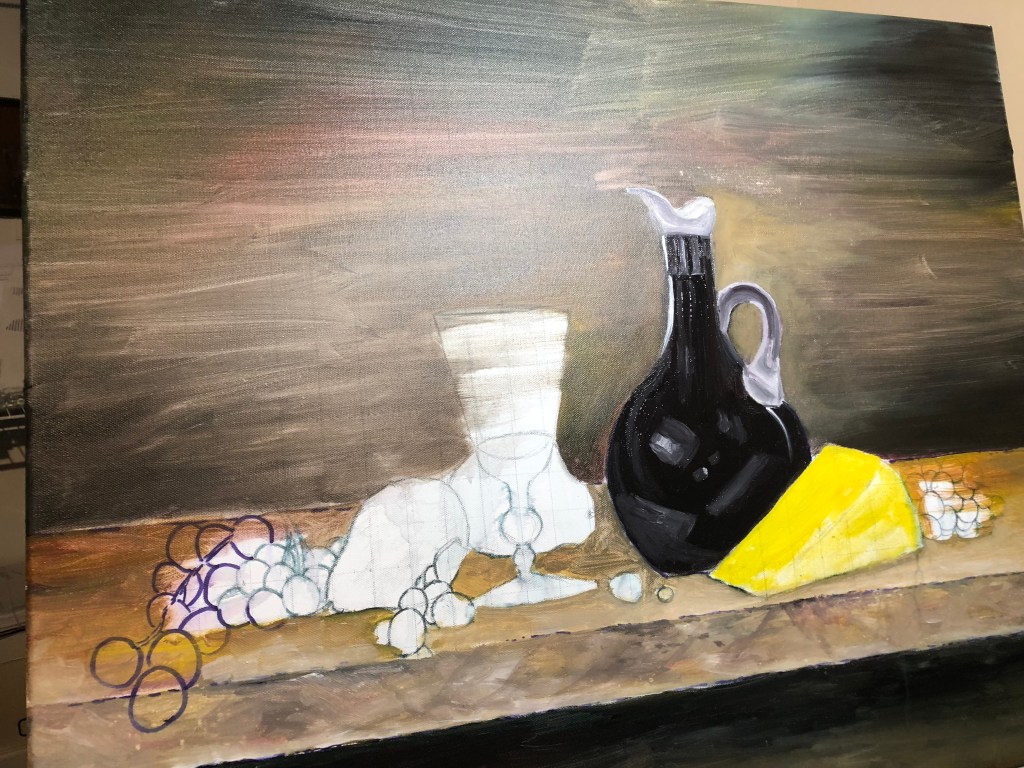
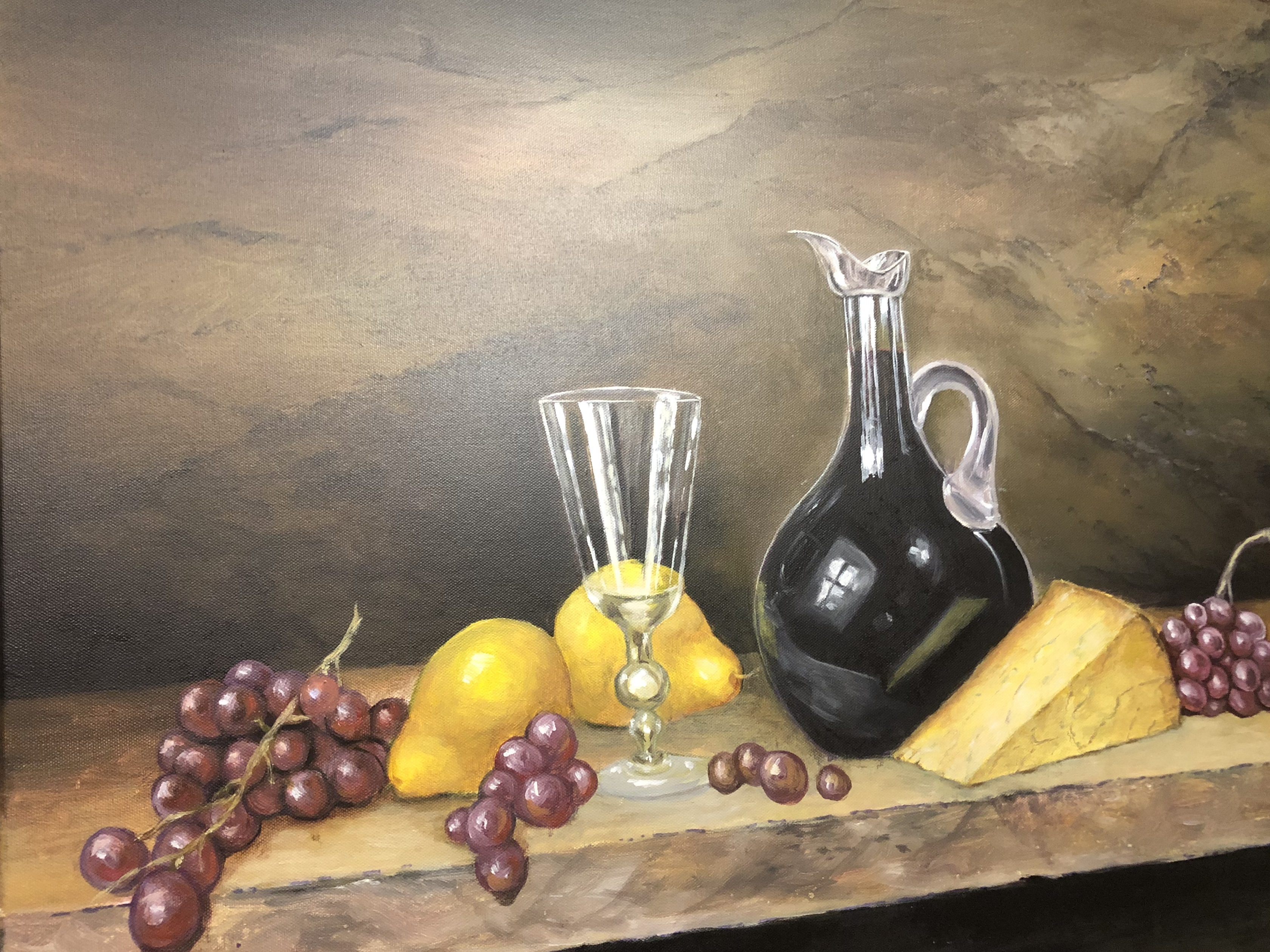
Painting of a still life. Note the transition between stages.

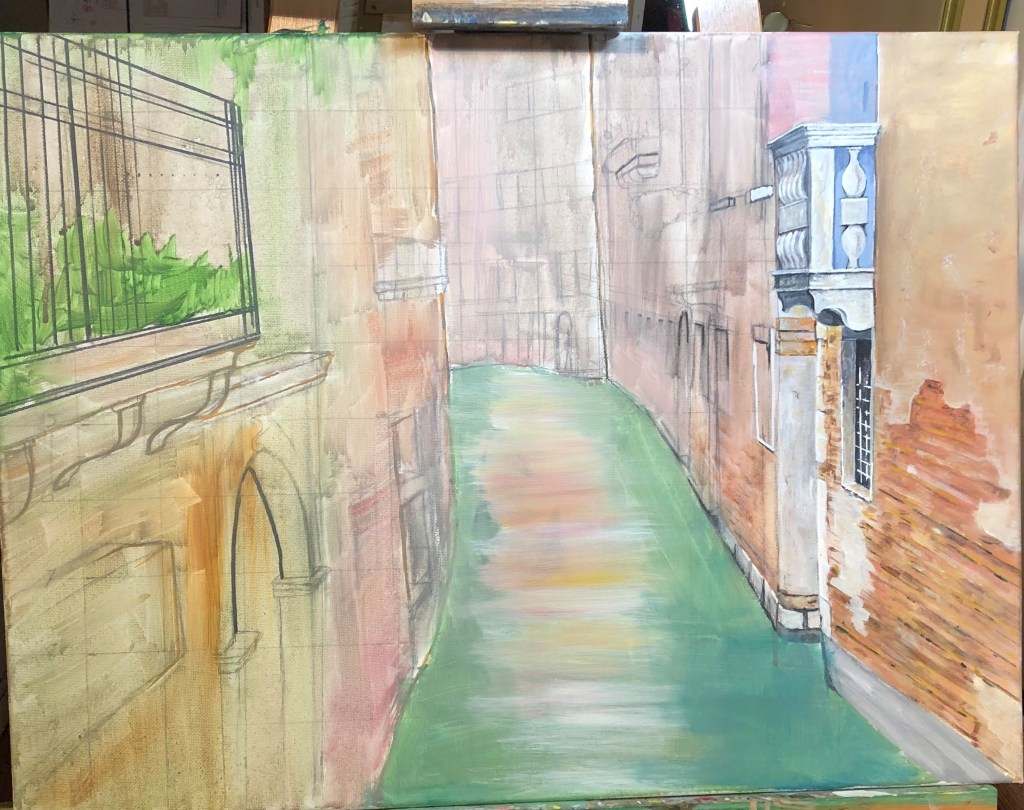
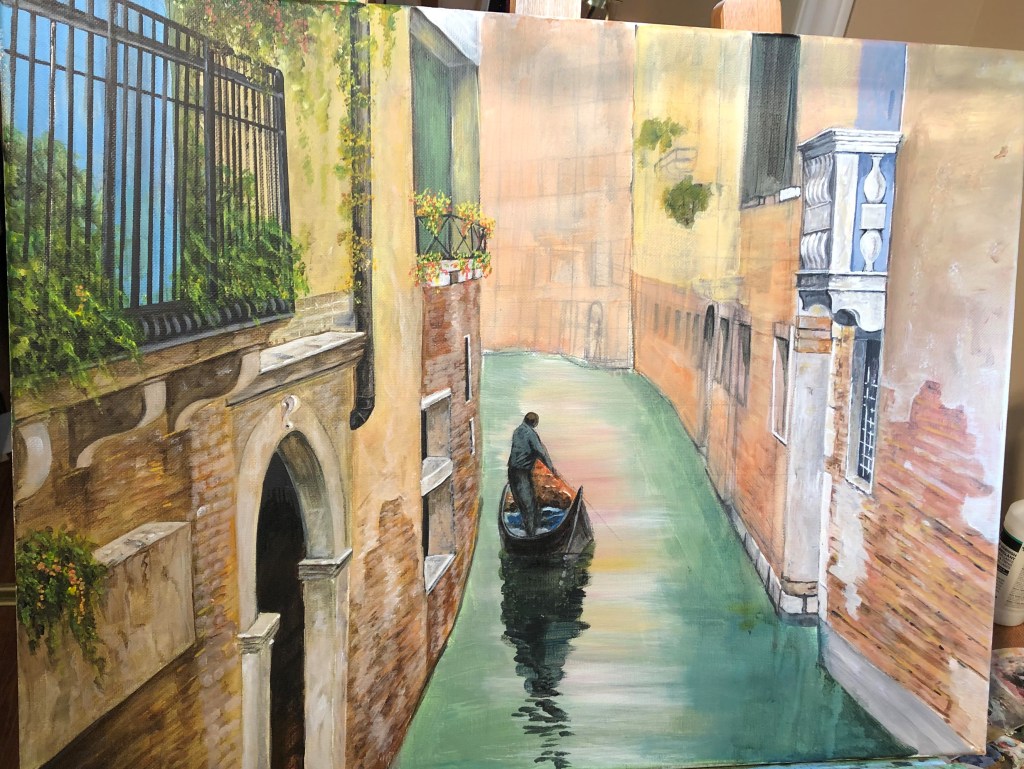
Painting of Venice scene. Note the stages.

This black-and-white pastel portrait is created from a clear, detailed reference photograph. Absolute accuracy in the initial sketch is essential, as even the slightest deviation can affect the true likeness of the subject. I begin the process by carefully developing the background around the head, establishing depth and contrast, and then proceed to render the clothing before refining the facial features with meticulous attention to tone and expression.
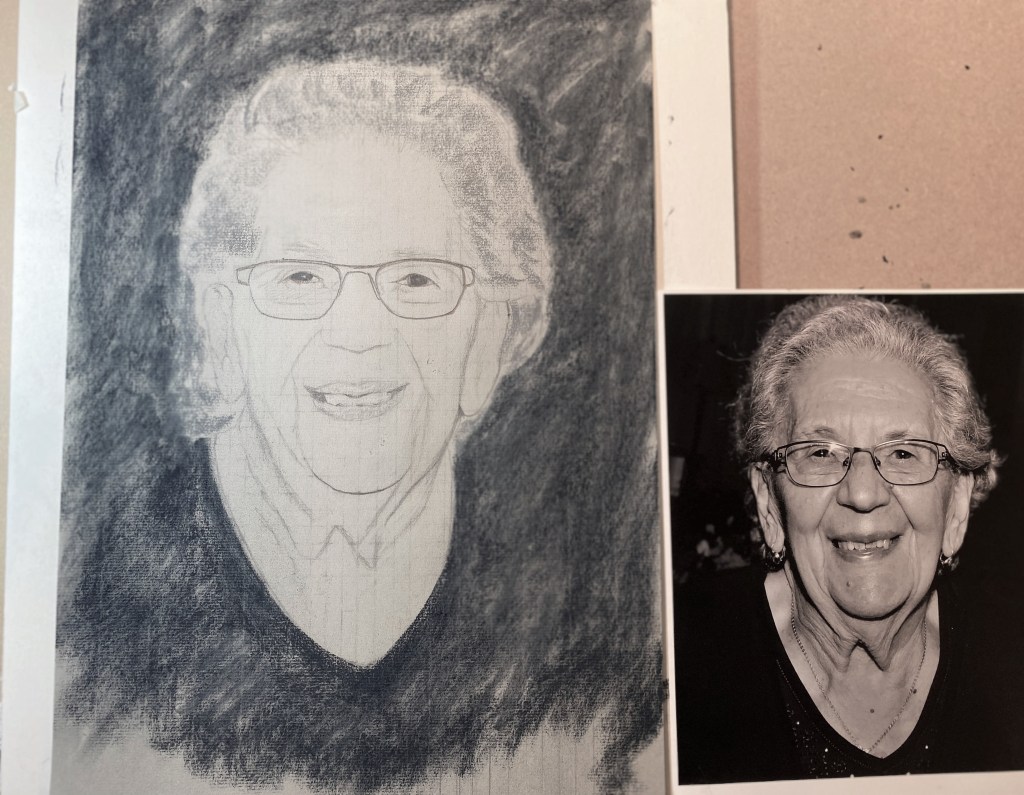
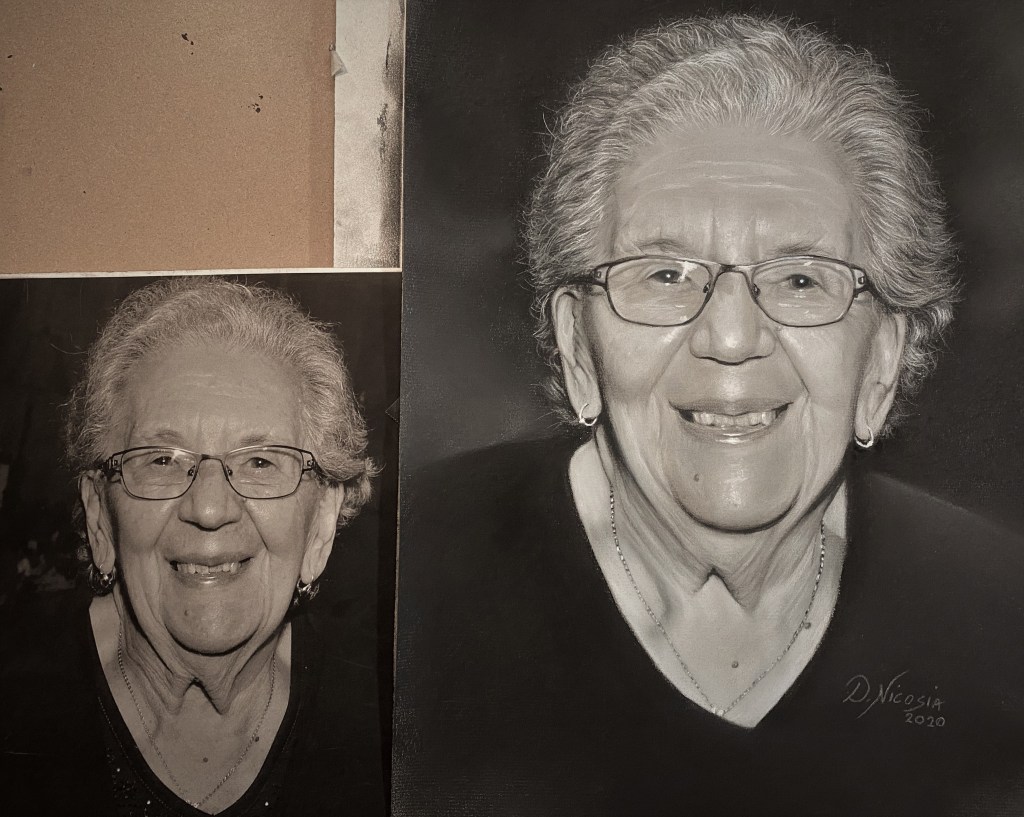
The next step is to begin painting the face and hair. Then finally I concentrate on the fine details. I focus on the highlites, wrinkles, shadows, hair texture, etc. This is the most time consuming and the most critical in creating a realistic true to life painting.

This is the final product.
 Nicosia Art